
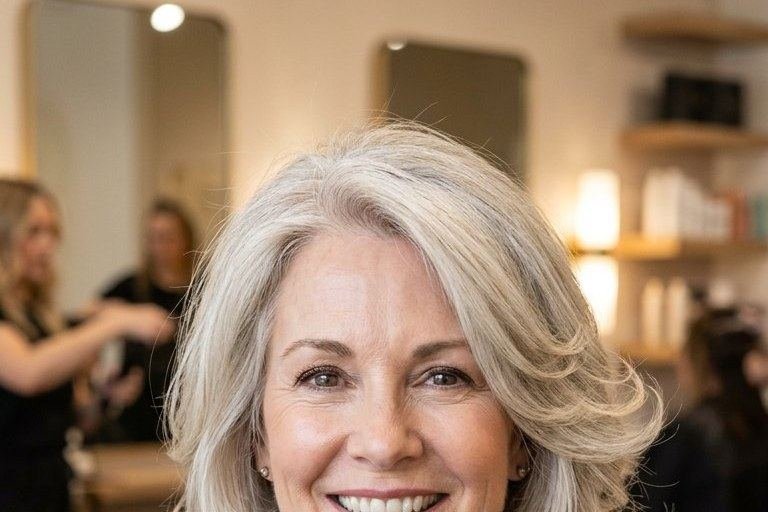
If your hair has lost density with age, layered haircuts for thin hair over 50 are the fastest fix there is. The right layering removes weight that drags fine strands flat, builds lift at the crown where thinning shows first, and creates movement that reads as fullness — all without a single styling product.
We’ve gathered 40 layered haircuts that flatter thin hair over 50, grouped by length so you can jump straight to yours: layered bobs, layered pixies, medium and shoulder-length layers, lobs, and the bang-and-colour combinations that multiply the volume effect. Each style includes what to ask your stylist and who it suits best.
✨ Quick Takeaways
- Layers build the illusion of density — but over-layering can thin the ends, so keep the perimeter solid where possible.
- Shoulder length and shorter holds volume best on fine hair; very long hair tends to drag flat.
- Soft interior (“hidden”) layers give movement while preserving a thick-looking hairline.
- Multi-tonal colour — babylights, balayage, lowlights — makes layered hair look even fuller.
- Refresh layered cuts every 6–8 weeks to keep the shape from collapsing.
Why Layers Work for Thin Hair Over 50
Thinning hair has three enemies: weight, flat roots and stringy ends. Layers solve all three at once:
- Weight removal. Long, heavy sections pull fine hair straight down. Cutting layers distributes that weight so strands can lift and bend.
- Built-in architecture. Shorter under-layers physically prop up the longer layers above them — volume that exists even on day two.
- Light play. Every layer edge catches light differently, and the eye reads that variation as density.
The catch — and it matters — is how the layers are cut. Fine hair needs a light hand: point-cut, interior and face-framing layers add movement, while aggressive razoring or too many layers can leave the ends see-through. Always book a stylist who works regularly with fine or mature hair, and bring photos.
How to Choose Your Layered Cut
| Your hair | Best layered approach |
|---|---|
| Fine & straight | Blunt perimeter + hidden interior layers; stacked or graduated bobs; feathered pixies. |
| Fine & wavy | Textured lobs, shags and butterfly cuts — waves amplify every layer. |
| Fine & curly | Dry-cut curl-by-curl layers in a lob shape; avoid wet cutting. |
| Thinning at crown/part | Crown-volume layers, stacked backs, deep side parts. |
| Thinning at the ends | Keep length at or above the collarbone; wispy point-cut ends. |
Face shape quick guide: round faces suit layers that add height and face-framing length; square faces suit soft waves and feathering; heart shapes suit chin-to-shoulder lengths; oval faces can wear anything on this list.
Layered Bobs (1–10)
1. Classic Layered Bob
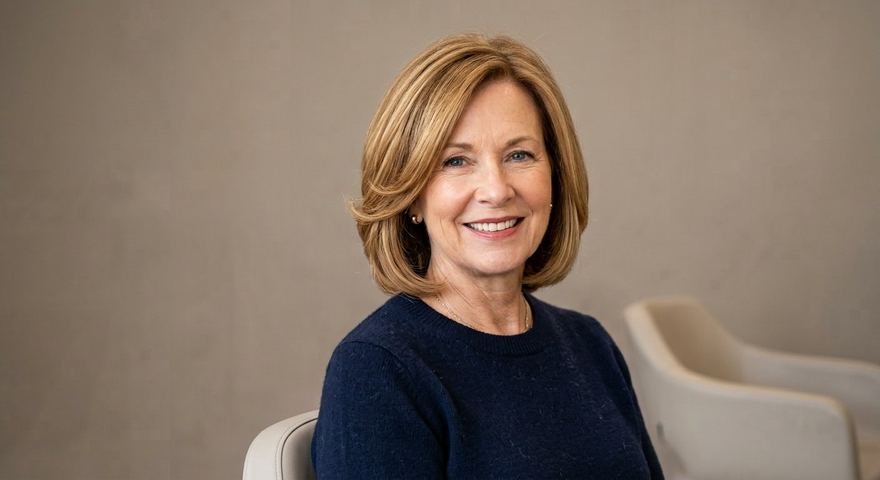
The gold standard for fine hair. Soft layers cut through a jaw-length bob let the ends flip and swing, while the nearly-solid baseline keeps the look of thickness. It’s polished, work-ready and styles in five minutes with a round brush.
💬 Ask for: “a jaw-length bob with soft layers through the interior, solid perimeter.”
2. Chin-Length Layered Bob
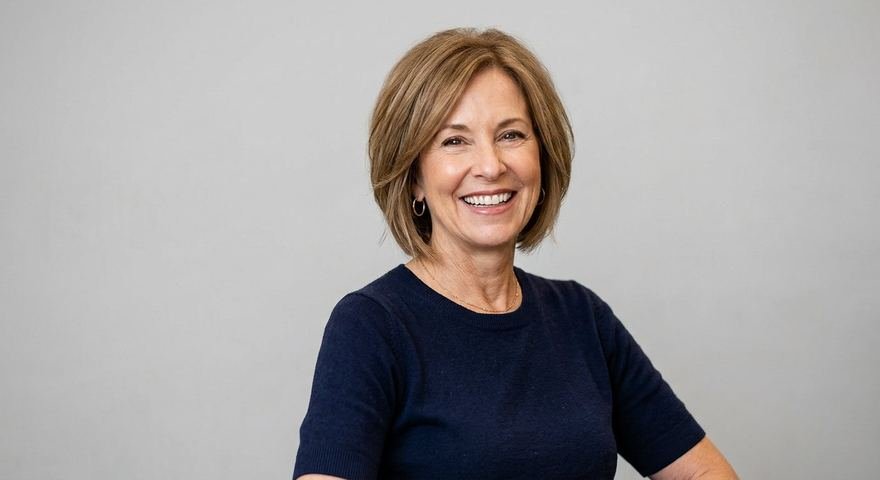
The shorter the hair hangs below the layers, the more natural spring you keep — and chin length is the sweet spot. Slightly longer front pieces angle down to slenderise round and square faces, while the back stays full.
3. Angled Layered Bob (A-Line)
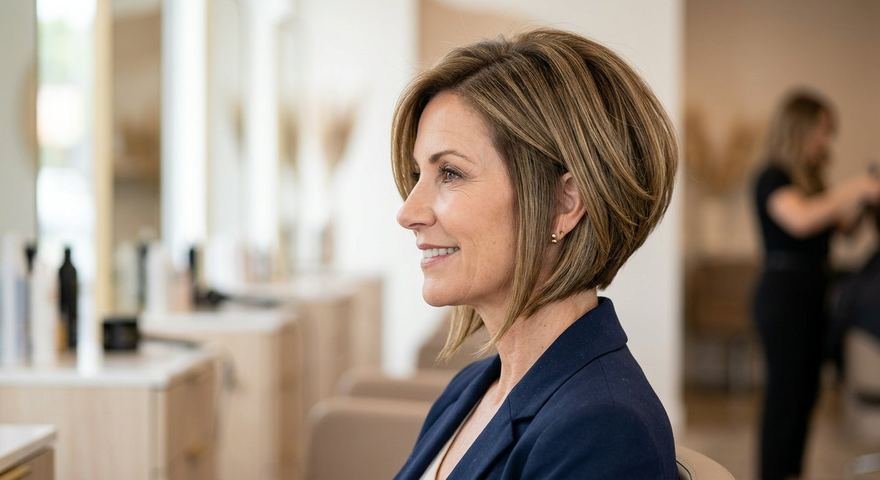
Longer at the front, shorter at the back, the diagonal line draws the eye down the face for a slimming effect. Hidden layers inside the back build volume exactly where thinning shows first — the crown. Ask for a soft A-line to avoid a harsh step.
4. Stacked Layered Bob
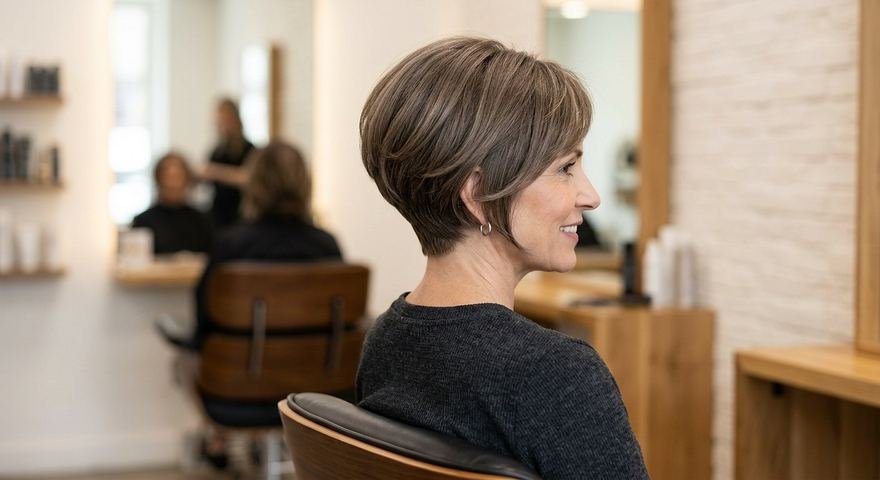
Stacked layers curve in tight graduation at the nape, forming a rounded wedge — instant fullness for a flat back. The front stays longer to frame the face, so the cut reads soft, not severe. Straight and wavy hair wear it best.
📅 Maintenance: refresh every 5–6 weeks so the stack doesn’t lose its curve.
5. Inverted Layered Bob
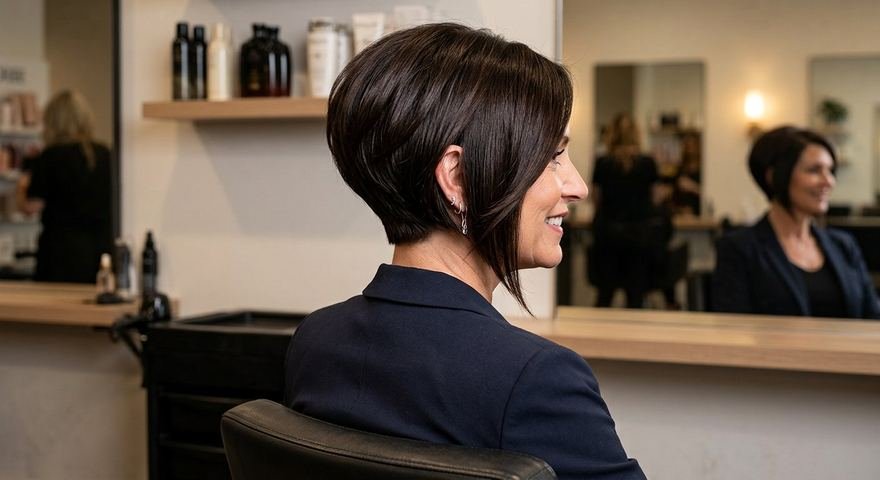
Like the stacked bob’s sharper sister: the inverted bob tapers dramatically from a long front to a short, layered back. The strong angle adds edge, while the interior stacking supplies the volume. Choose a chin-grazing front for a gentler version.
6. Textured Layered Bob
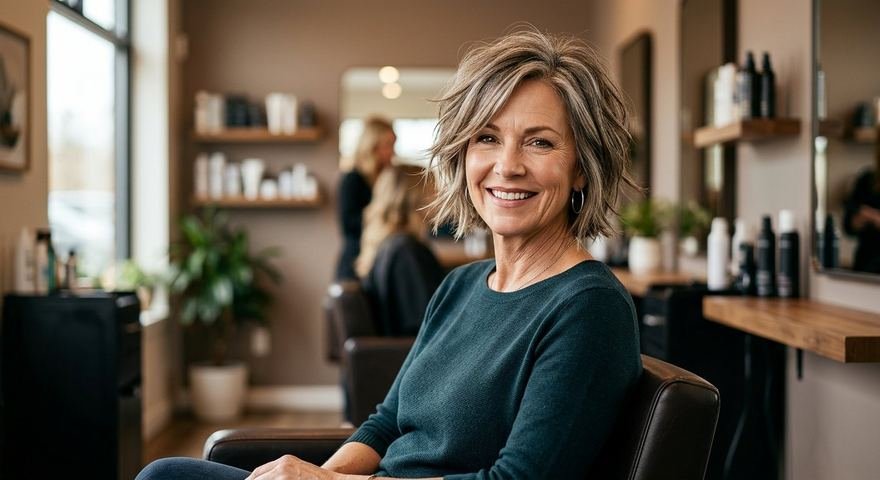
Choppy, piece-y ends give this bob grip and movement, so fine hair doesn’t collapse into one flat sheet. The trick is texture for movement, not thinning — a good stylist point-cuts rather than razors fragile strands. Day-two hair looks even better with a dusting of dry shampoo.
7. Shaggy Layered Bob
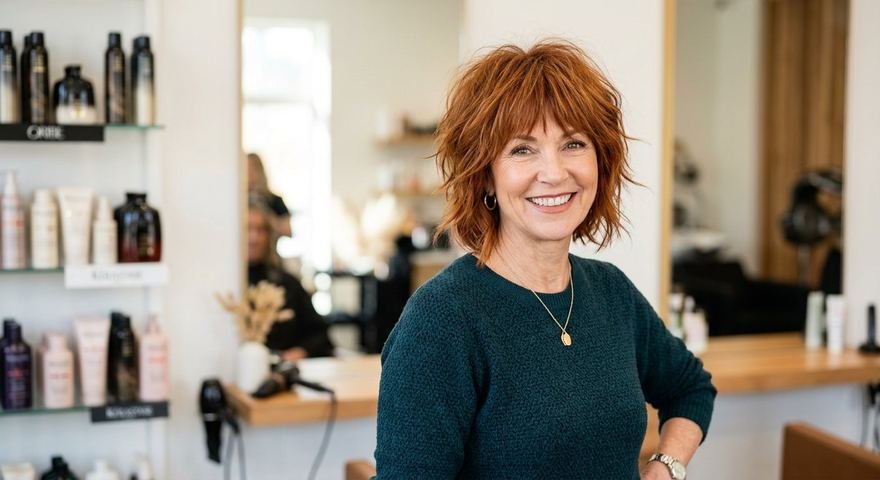
A bob that met a shag: unruly layers throughout, a soft fringe, and rock-and-roll ease. All those disconnected ends make fine hair look deliberately abundant rather than sparse. Air-dry, spritz texture spray, walk out the door.
8. Layered Bob with Curtain Bangs
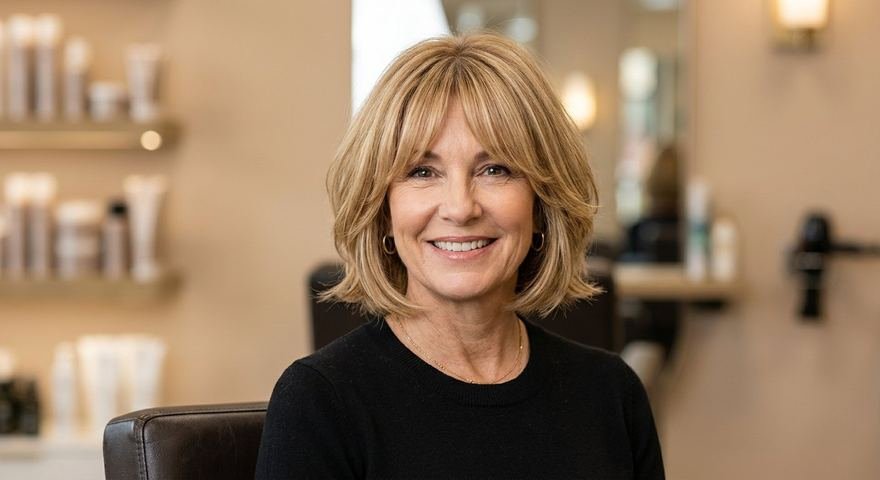
Curtain bangs split open at mid-forehead and melt into the bob’s front layers, flattering every face shape and softening the temples. Because the fringe blends rather than sits blunt, it needs surprisingly little density to look full.
9. Layered Bob with Side-Swept Bangs
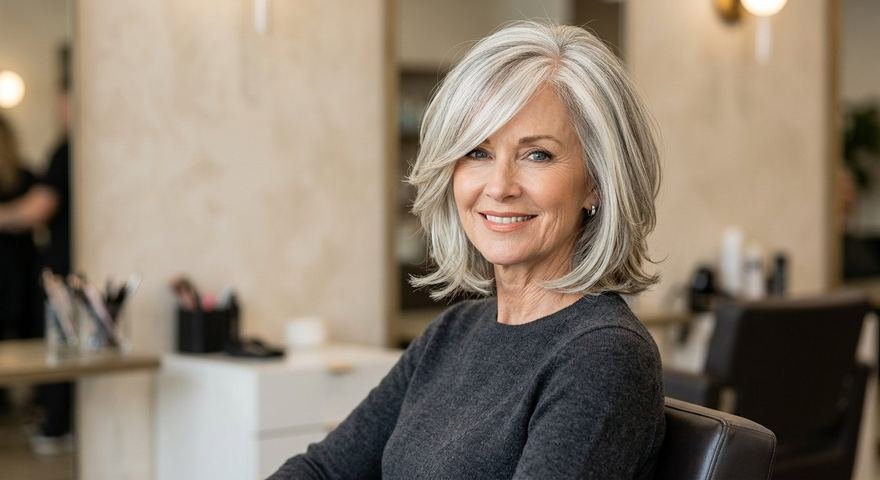
A deep side part with a long, sweeping fringe creates instant asymmetric volume — hair always looks thicker when it falls diagonally. If your fringe area is sparse, this is the bang style that still works.
10. Blunt Bob with Hidden Layers
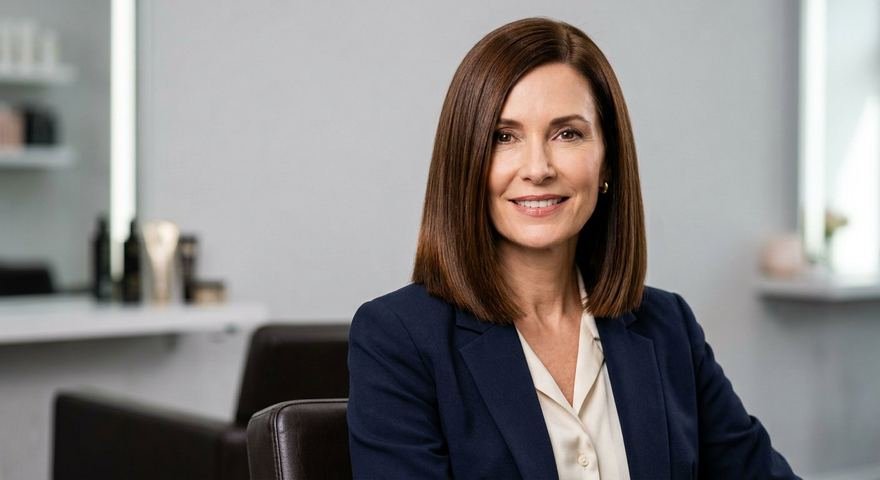
The best of both worlds: a blunt, one-length perimeter reads as maximum density at the ends, while invisible internal layers lighten the interior so the shape doesn’t fall flat. The smartest single choice on this list for truly fine hair.
💬 Ask for: “internal layers, solid perimeter — don’t touch the outline.”
Layered Pixies (11–18)
11. Layered Pixie with Crown Volume
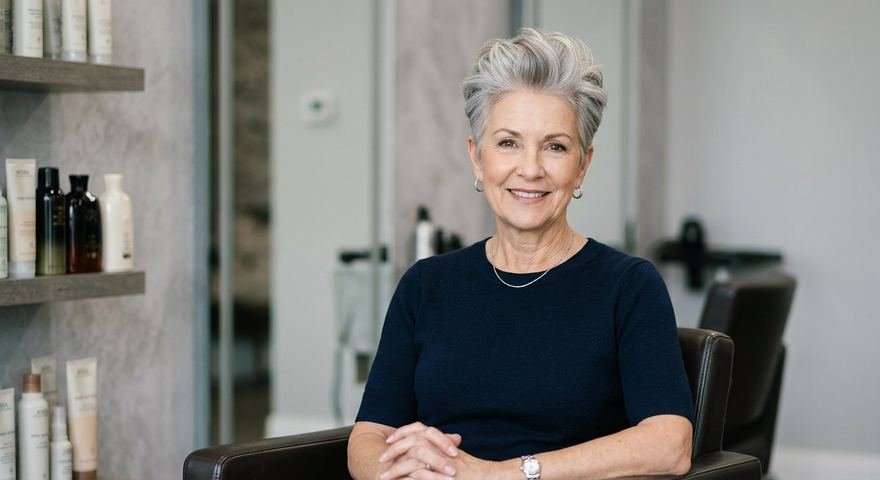
This pixie is built like scaffolding: shorter layers underneath prop up the longer ones above, concentrating height right where thinning begins — the crown and part. Styling is a five-minute finger-comb, and the volume holds all day.
12. Feathered Pixie
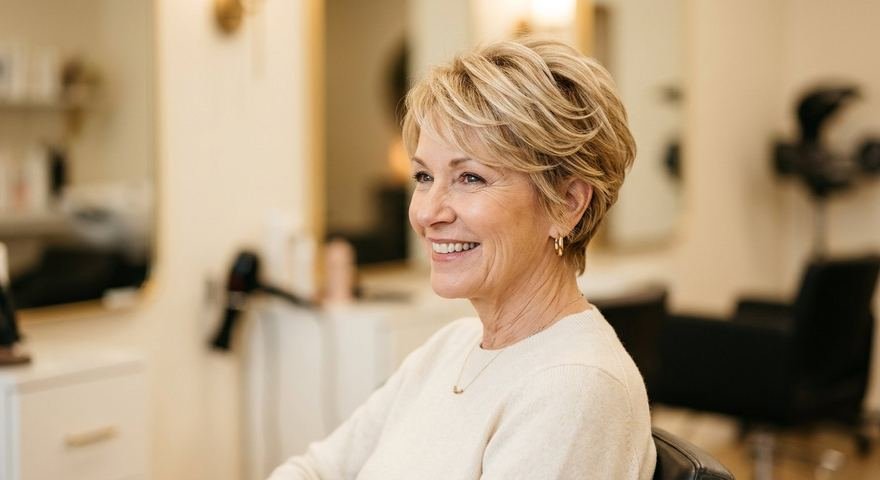
Feathering curves each layer gently away from the face, creating light, airy fullness that never looks helmet-like. It’s a classic for a reason — soft, feminine, and flattering from every angle. A small round brush at the roots restores the shape in minutes.
13. Choppy Layered Pixie
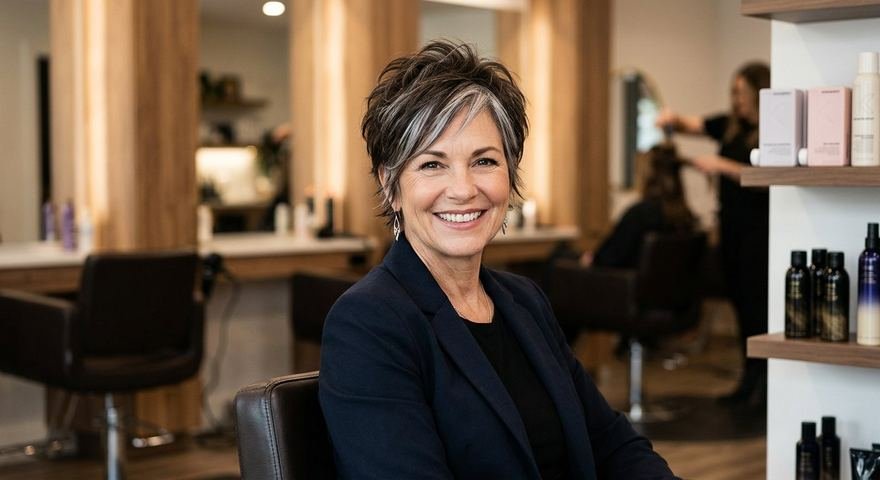
Disconnected, choppy pieces give fine hair the one thing it lacks: grip. The eye reads deliberate texture as thickness, and the slightly undone finish feels modern at any age. A pea-sized amount of pomade separates the pieces.
14. Piece-y Textured Pixie
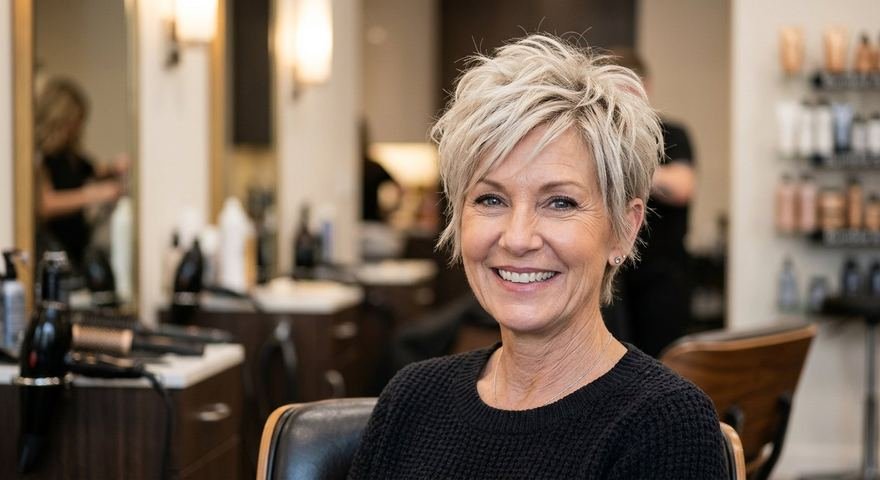
Every strand is encouraged to go its own way. Separated, piece-y texture means no section of hair has to look dense on its own — the overall effect does the work. Genuinely wash-and-go.
15. Tapered Layered Pixie
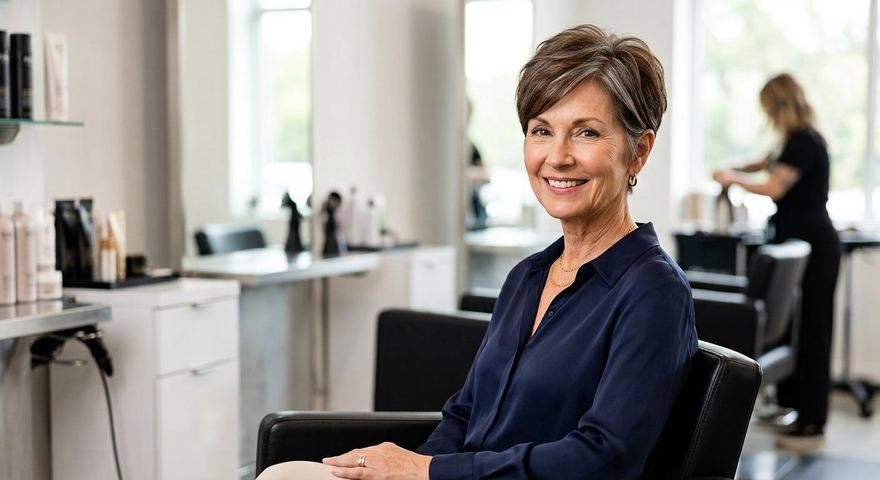
Tapered sides and nape graduate into a longer layered top, giving a tailored silhouette that grows out cleanly between appointments. Low product, low fuss, always neat — ideal if you’d rather not think about your hair before 9 a.m.
16. Layered Pixie with Long Fringe
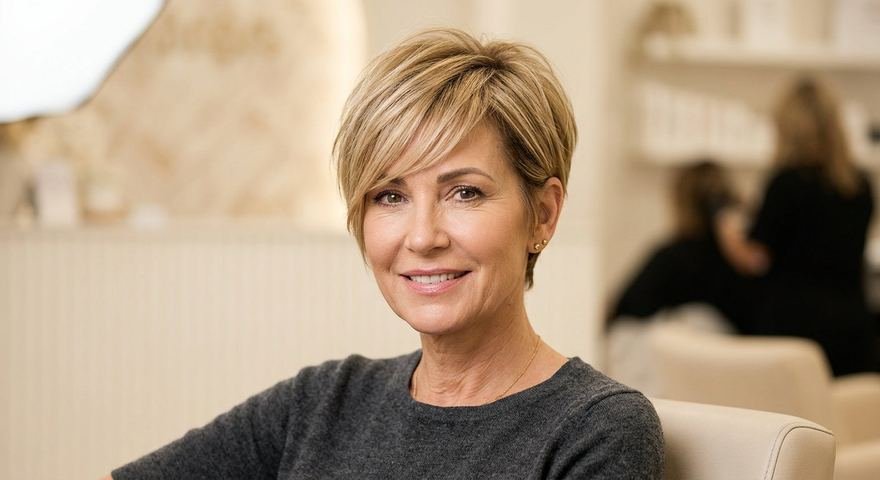
A long, cheekbone-grazing fringe connects to the top layers in one continuous sweep, elongating round faces and hiding a sparse hairline. Wear it forward for softness or pushed back for a lift.
17. Silver Layered Pixie
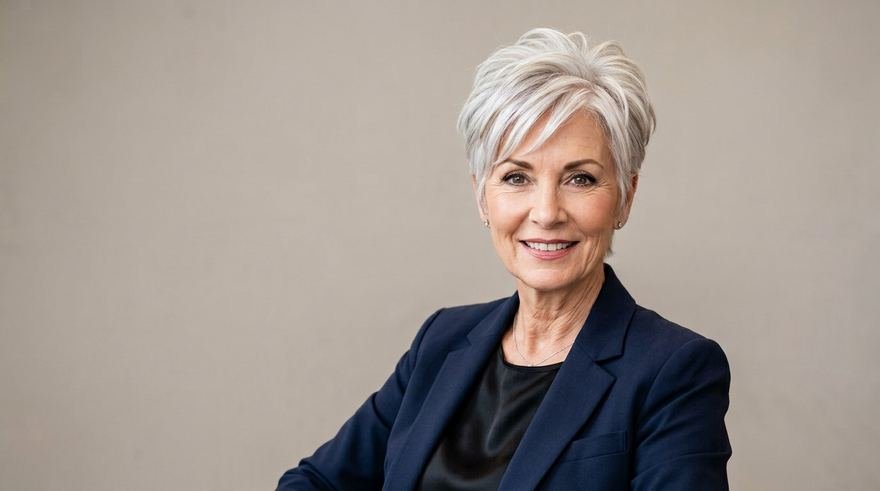
Layers catch light at different angles, and on silver hair that shimmer reads as density. Ask for subtle pale lowlights woven through — the tonal contrast makes fine hair look twice as thick. A monthly purple shampoo keeps the silver bright.
18. Undercut Pixie with Layers
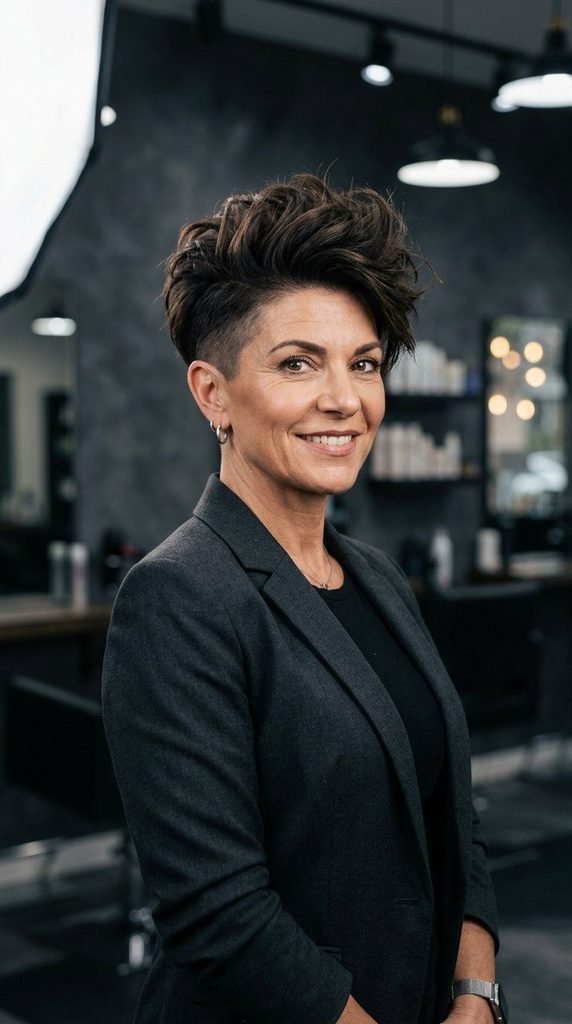
Clipper-short sides remove weight at the edges, which paradoxically makes the layered top look fuller. Bold, cool in summer, and the fastest morning routine of any cut on this list.
Medium & Shoulder-Length Layers (19–28)
19. Shoulder-Length Layers
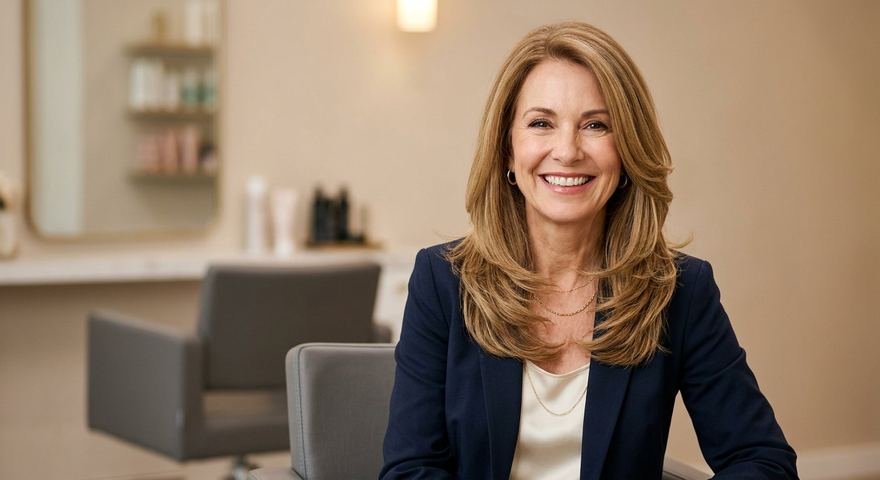
The most-requested length in salons for good reason: long enough for a ponytail or bun, short enough to hold volume. Layers start around the chin and cascade to the ends, with a few face-framing pieces in front.
20. Butterfly Haircut
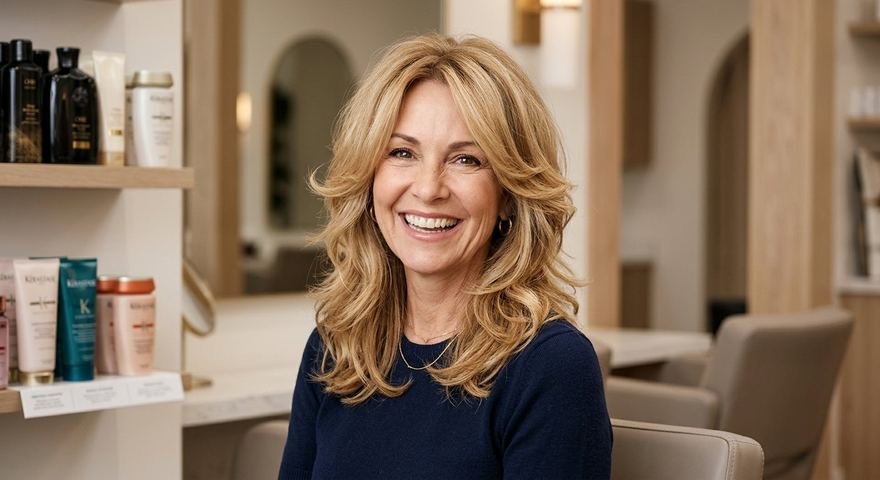
The viral “two haircuts in one”: shorter, face-framing layers sit on top of longer layers beneath. The top layer gives bounce and volume around the face; the bottom layer preserves your length. Perfect if you want fullness without sacrificing inches.
💬 Ask for: “a butterfly cut — short face-frame, long base.”
21. Layered Shag with Bangs
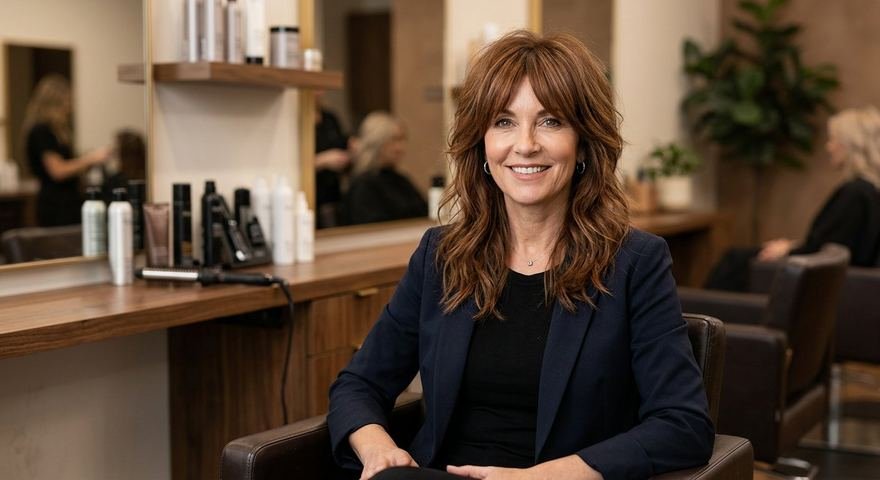
Seventies-inspired but thoroughly modern: a soft fringe, choppy layers throughout, and effortless texture built into the cut. All those staggered ends create the impression of abundance — one of the best fine-hair illusions there is — and it grows out beautifully.
22. Modern Wolf Cut
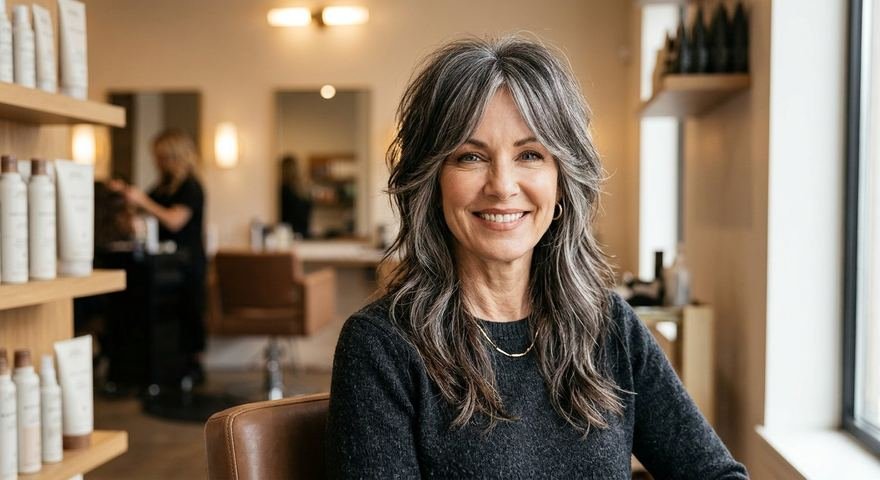
Half shag, half mullet: explosive volume at the crown, layers all the way down, wispy face-framing tendrils. It’s edgy but surprisingly wearable — ask for a soft wolf to keep it office-friendly. Works best on wavy hair or with a texture spray.
23. Face-Framing Layers
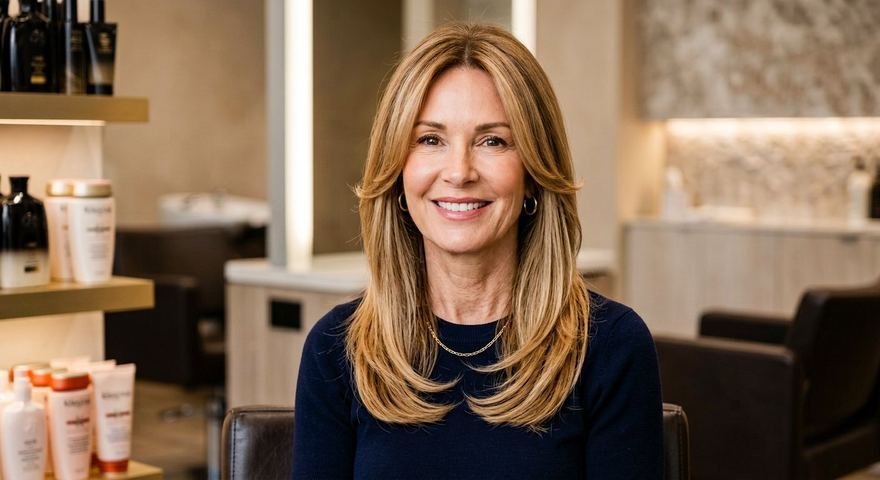
The minimal option: just two or three long layers in front, everything else untouched. These “invisible layers” add movement and brighten the face without thinning your ends — the safest first step if you’re nervous about layers.
24. Wispy-End Layers
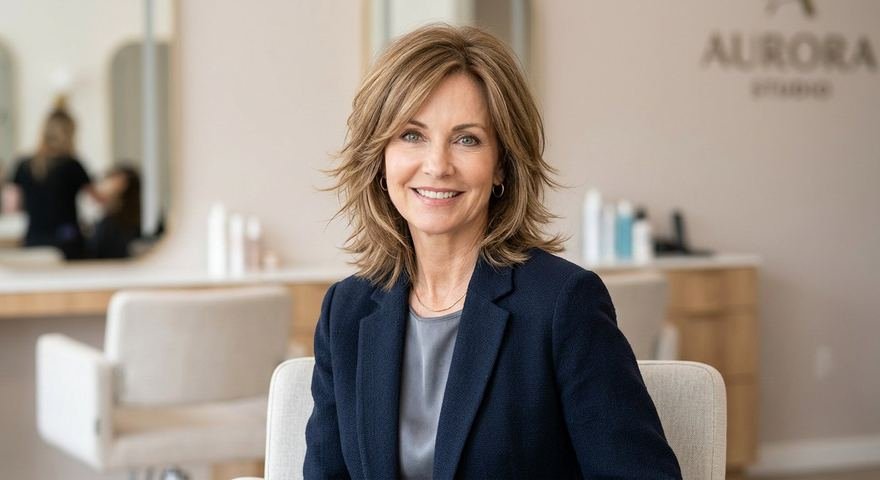
Ends are point-cut into feather-light wisps so the hair moves as if there’s more of it. The softening effect flatters a softening jawline. One caution for fragile hair: request scissors, not a razor, for the point-cutting.
25. Layered Lob
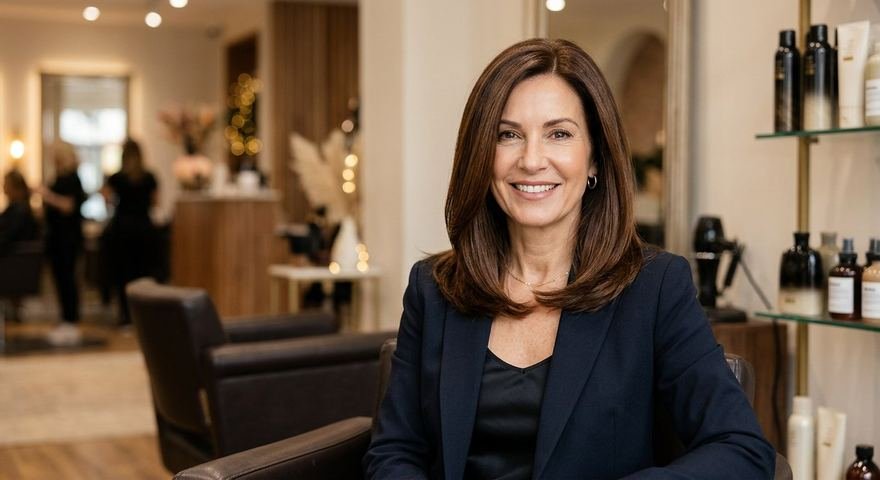
The long bob resting at the collarbone, cut with long layers that start low. It’s the gentlest layered cut on this list — length preserved, lift restored — and the perfect transition style if you’re cutting down from long hair.
26. Wavy Layered Lob
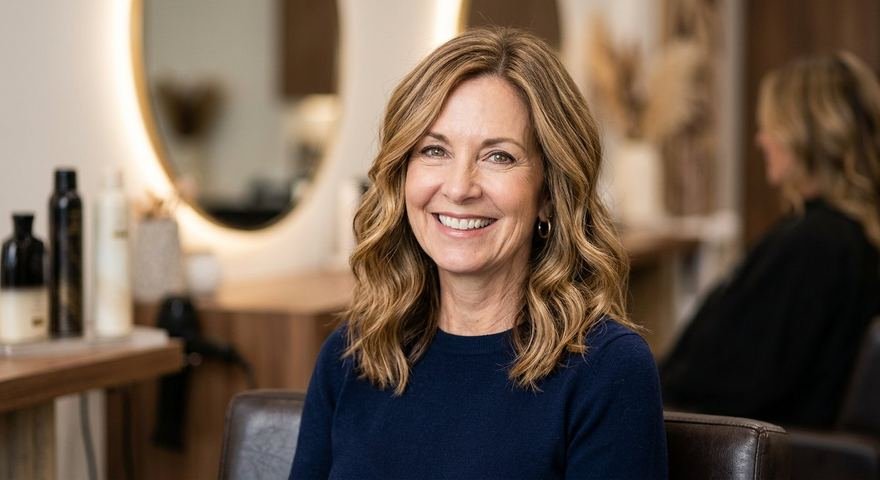
Waves and layers multiply each other: every bend in the hair reveals another layer edge catching the light. Wrap 1.5-inch sections around a large wand, brush out, and the result reads as twice the hair you started with.
27. Deep Side-Part Layers
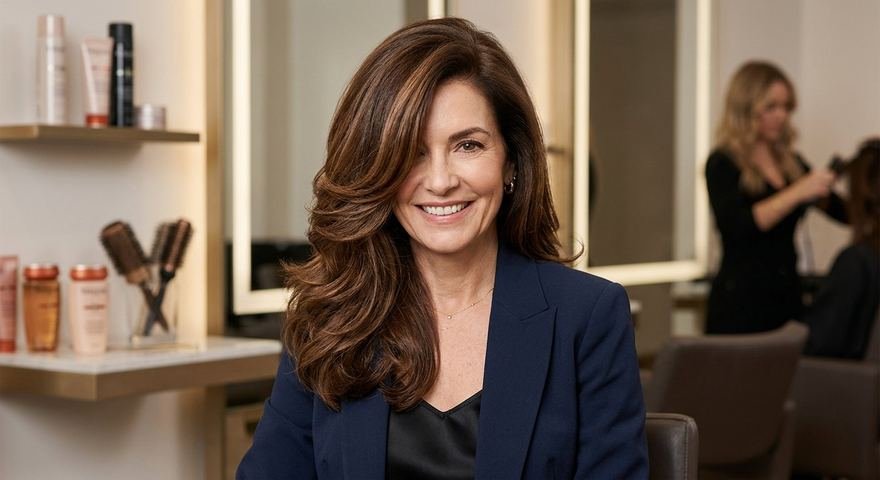
The cheapest volume trick in hairdressing: flip your part to the deep side and the hair over the heavy side lifts at the root all by itself. Cut layers that support the sweep, and a flat crown disappears in the salon chair.
28. U-Shaped Rounded Layers
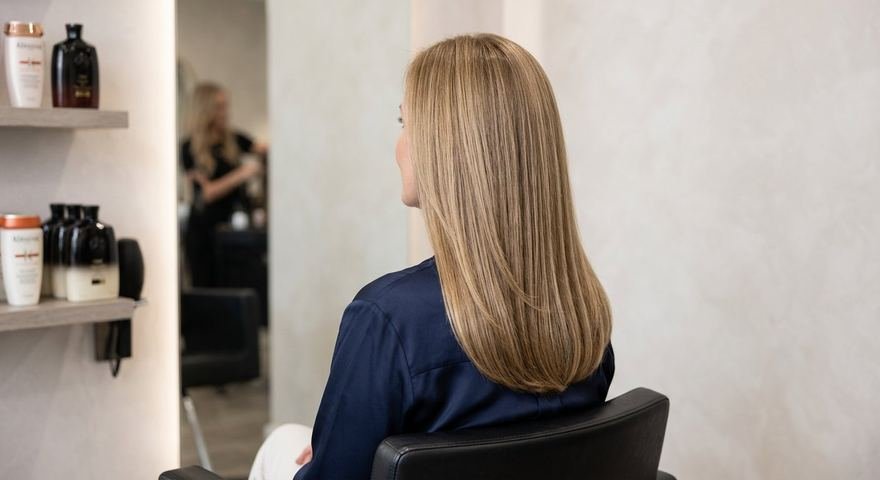
The back is trimmed into a soft U so the perimeter looks full and undamaged, while interior layers keep it from hanging heavy. The best choice when you want to keep maximum length on fine hair without the stringy-ends problem.
Lobs, Bangs & Colour Combos (29–36)
29. Medium Layers with Curtain Bangs
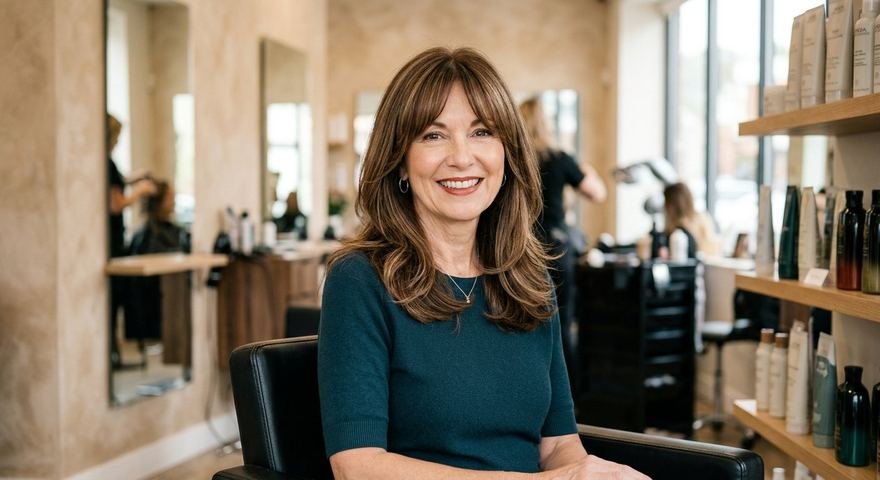
Shoulder-length layers paired with a curtain fringe brighten the face and soften the forehead. Because the bangs dissolve into the layers, there’s no blunt line that would expose sparseness — just a flattering frame of softness.
30. Layers with Wispy Bangs
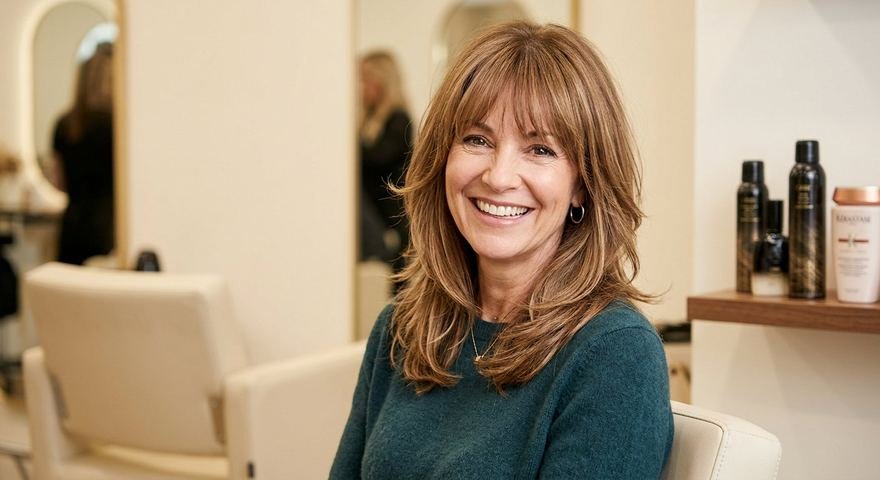
A brow-skimming, feathery fringe conceals forehead lines and needs only a whisper of density to look right. It pairs with any layered length on this list and softens the whole face.
31. Money-Piece Layers
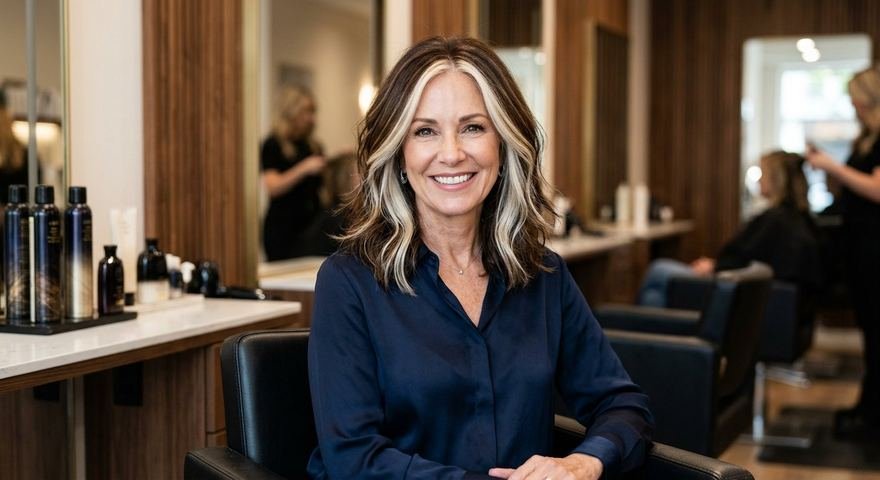
Bright face-framing highlights — the “money piece” — are placed exactly where your layers fall. Light at the front creates dimension, and dimension reads as thickness. Bonus: fewer foils means gentler processing for fragile hair.
32. Balayage Layers
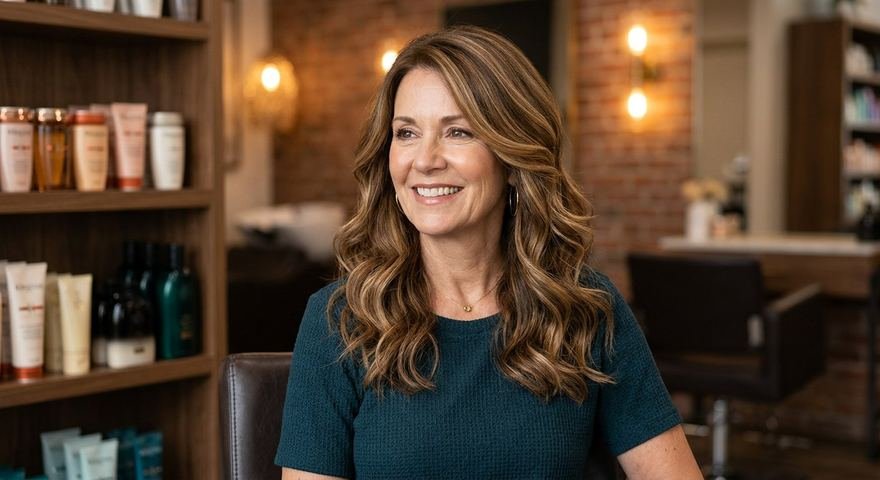
Hand-painted sweeps of colour create natural shadows and light within the layers, mimicking the way thicker hair catches the sun. Balayage also grows out softly, stretching salon visits — kinder to hair and to your diary.
33. Babylights on a Layered Lob
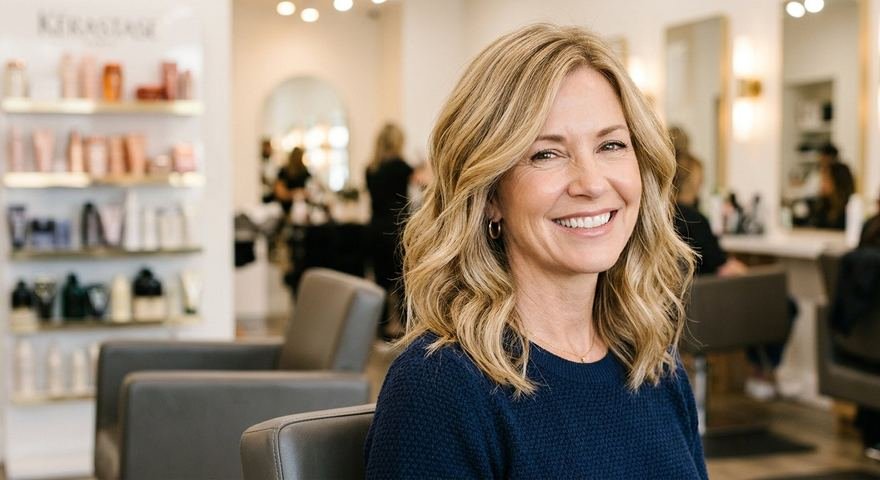
Babylights are micro-fine highlights that imitate childhood sun-lightening. On a layered lob, the shimmering mix of tones pools at every layer’s bend — the single most convincing colour illusion of density.
34. Silver Lob with Lowlights
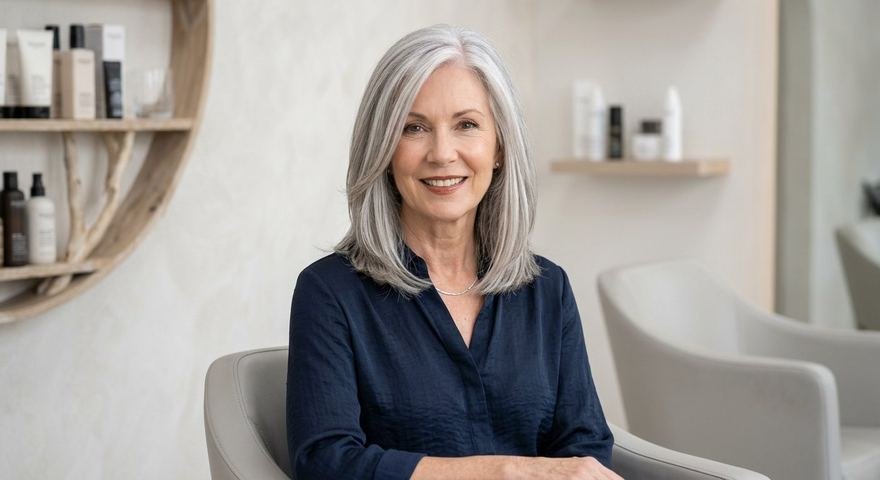
Pure silver can look one-dimensional on thin hair. Weaving pale ash lowlights through a layered lob adds the tonal contrast that reads as depth and fullness — and because they’re lowlights, regrowth is invisible.
35. Layered Curly Lob
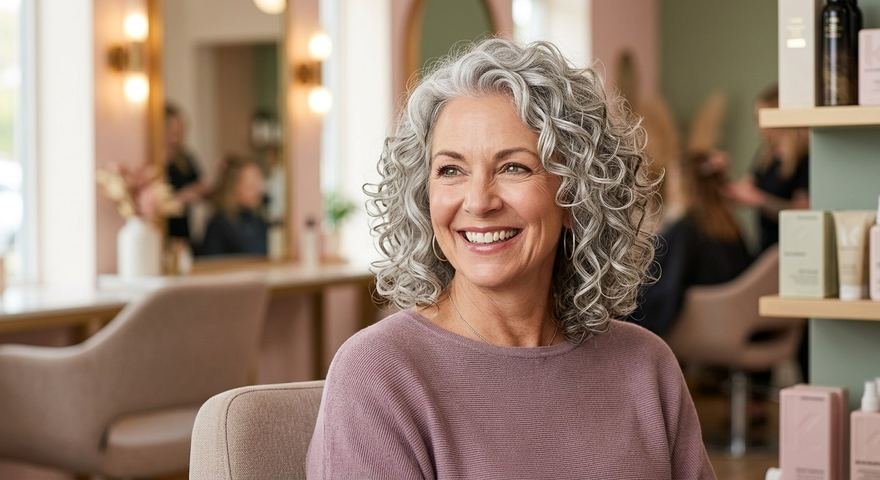
Fine curls need shape, not length: rounded layers cut curl-by-curl let spirals stack into a full silhouette instead of a flat triangle. Find a stylist who cuts curls dry, and hydrate constantly — defined curls always look denser than frizzed ones.
36. Layered Cut with Lowlights and a Gloss
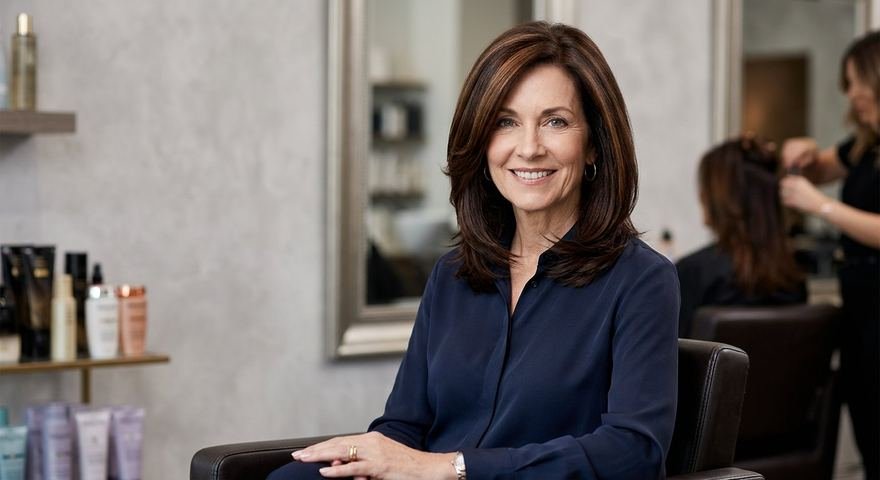
Whatever your base colour, a few lowlights underneath plus a clear salon gloss creates shine, and shine is volume’s best friend — light bouncing off layered, glossy hair looks fuller than matte hair ever does. A gloss is also the gentlest salon service going.
Curls & Special Solutions (37–40)
37. Layered Cut for Wiry Grey Hair
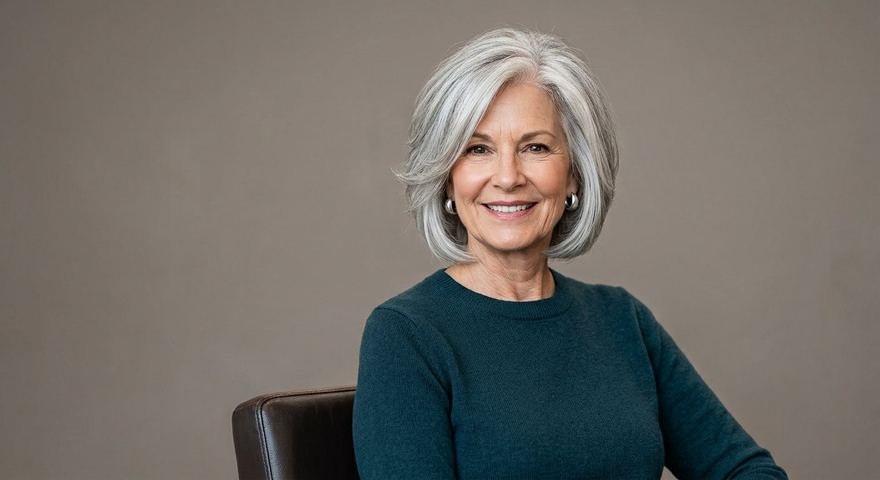
Grey hair often changes texture — coarser, wirier, determined to stick out sideways. Slide-cut layers (the scissors glide down the strand) soften that stubborn texture and help the layers lie flat. Book someone who works with mature grey hair specifically.
38. Root-Lift Layered Volume Cut
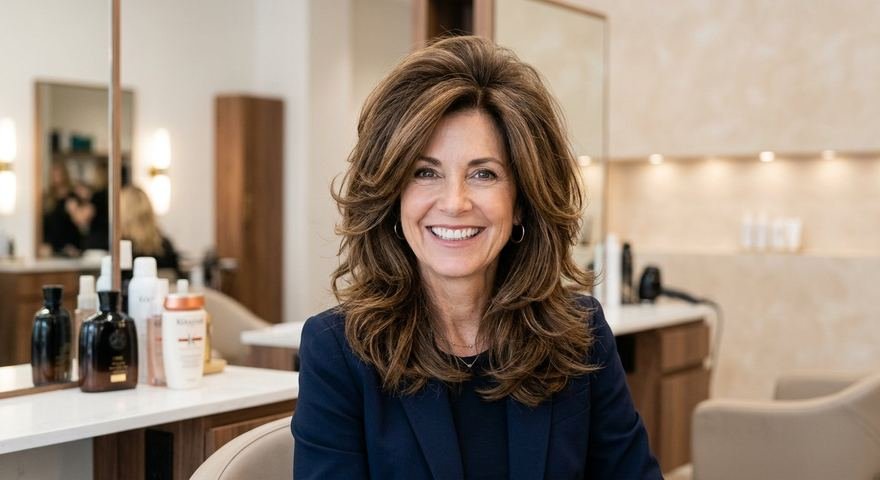
Engineered for the flat crown: micro-layers at the part line and crown stand the roots up, while the surface layers stay long enough to hide the architecture. Finish with mousse and a round brush for a lift that outlives your morning.
39. Hidden-Layers Long Cut
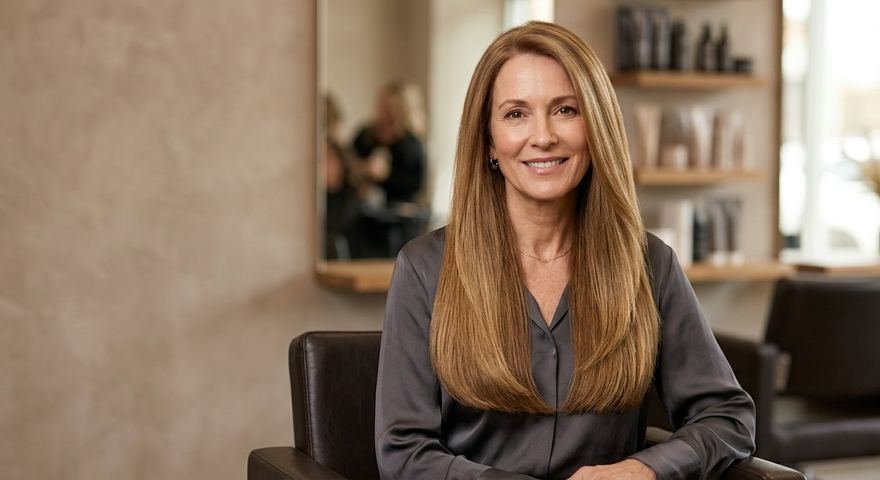
For the woman who refuses to go short: keep every visible inch, and layer only the interior. Movement happens on the inside while the outside perimeter stays thick and blunt. This is how long, fine hair survives past 50.
40. Layered Wedge Cut
📷 Image slot: layered-wedge-cut.jpg — ask me to generate this photo, or drop in your own.
The retro wedge, reimagined: graduated layers curve under at the nape into a rounded, head-hugging shape with remarkable built-in volume. Short, structured and genuinely wash-and-wear — proof that a 1970s Olympic icon got fine hair very, very right.
How to Style Layered Thin Hair (and Keep It Full)
- Blow-dry upside down for the first 60 seconds — root lift that lasts all day costs nothing.
- Root products only. Mousse or root-lift powder at the scalp; conditioner never above mid-length.
- Dry shampoo is a styling product. A spray at the roots on day two adds grip and height instantly.
- Cut every 6–8 weeks. Layered shapes collapse as they grow; a small trim resets the volume.
- Go easy on heat. Fine hair damages visibly — always heat-protect, and keep irons at medium.
- Choose dimensional colour. Any mix of tones (highlights, lowlights, gloss) out-performs flat colour for the illusion of density.
Frequently Asked Questions
Do layers make thin hair look thinner?
Not when they’re cut correctly. Over-layering — too many layers or aggressive razoring — can leave fine ends see-through, which is where the myth comes from. Light interior layers, face-framing layers and stacked shapes do the opposite: they build volume. Show your stylist photos and say you want movement without losing density at the ends.Should thin hair over 50 be layered or one length?
A hybrid wins: keep a solid, blunt perimeter (blunt lines read thick) and layer the interior for movement. If you love a clearly layered look, choose a cut designed around layering — a shag, butterfly cut or stacked bob — so the whole shape supports the layers.What hair length is best for fine hair over 50?
Between the chin and the collarbone is the sweet spot. Shorter than that can work beautifully too (pixies and bobs hold volume easily); much longer and the weight starts dragging the roots flat and exposing thin ends.Are bangs a good idea for thin hair?
Yes — the lighter the better. Wispy, side-swept and curtain bangs need little density and conceal forehead lines. A thick, blunt fringe is the one style to avoid if your hairline has thinned noticeably.What is the butterfly haircut?
It’s a layering technique where short face-framing layers are cut over a longer base layer — like two haircuts stacked. You get volume and bounce at the front while keeping length overall, which is why it suits thin hair over 50 so well.How can I make my layered hair look thicker instantly?
Flip your part to the deep side, blow-dry the roots against their growth direction, add a pinch of root-lift powder, and finish with a light texturizing spray on the mid-lengths. Ninety seconds, visibly twice the hair.
Ready to Ask for Layers?
Screenshot your three favourites from this list and take them to your stylist — a good one will adapt the lengths, layer placement and fringe to your density, texture and face shape until the cut is unmistakably yours.
Fine hair over 50 isn’t a limitation. With the right layers, it’s simply hair that finally has somewhere to go.